
The Warrior’s Changing Measure of Success
The Book of Five RingsThis thread follows Musashi’s move from counting victories to pursuing an understanding that can be transmitted and applied.
increasing Bearing strength in each event
 decreasing
Bearing strength in each eventdecreasingVictories Without Certainty
Success Under Suspicion
The Record
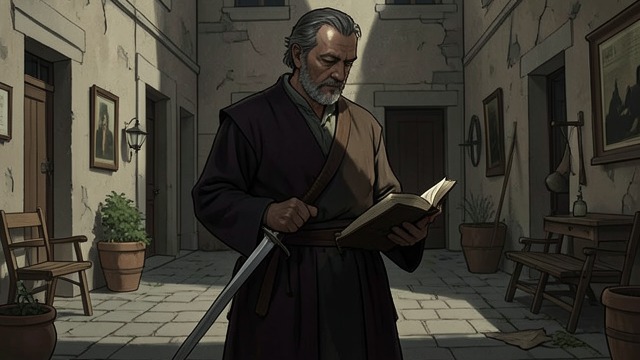
Miyamoto Musashi’s undefeated contests might seem to settle his standing as a strategist. Instead, he treats the record as an open question.
Limits of Reputation
His reflection exposes the difference between a favorable outcome and a reliable principle. The distinction sets his later teaching apart from simple self-celebration.
Daily Investigation

Seeking the Principle
Morning and Evening Study
Musashi says he studied persistently after reconsidering his victories. The long interval makes understanding a discipline accumulated over time.
A Different Kind of Progress
He no longer relies only on the memory of successful encounters. He looks for an account of why strategy works and how its principles extend beyond a single fight.
Recognition Around Fifty
Finding the Way
Late Understanding
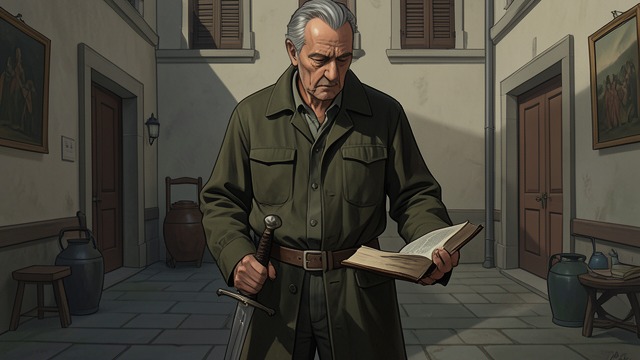
Musashi dates his recognition of the Way of Strategy to about fifty. This milestone arrives decades after his first duel.
Achievement Through Practice
The narrative makes maturity the product of persistent examination. The long delay also warns against confusing early proficiency with completed knowledge.
Life Beyond a Single Way

Applying Strategic Virtue
Many Arts and Abilities
Musashi says he practiced varied arts and abilities without following one particular Way. Strategy becomes a source of adaptable understanding rather than a narrow professional identity.
Generalized Insight
His account links mastery to seeing principles across different practices. The strategist remains grounded in training while refusing to be confined by one outward form.
The Elder Author

Turning Experience into Instruction
A Late-Life Voice
At sixty, Musashi sets down his account for readers. He presents his teaching as the result of decades of contests, study, and correction.
From Personal Path to Shared Way
Writing changes the scale of his work: individual insight becomes an invitation to train. The text asks readers to test its principles rather than accept his reputation alone.
After roughly sixty duels
In the years after his reassessment
At approximately age fifty
After recognizing the Way, before 1645
At age sixty in 1645
